Welcome to the DirectDemocracyS system. To view all the public areas of our website, simply scroll down a little.

Blog
Program for Tajikistan

DirectDemocracyS
New world political organization
POLITICAL, ECONOMIC, FINANCIAL AND SOCIAL PROGRAM
for
REPUBLIC OF TAJIKISTAN
Analysis, Criticism, and a New Path
June 2026
SUMMARY OF EXECUTION
In short: Tajikistan is on the brink of a silent crisis. For more than 30 years, the Rahmon family’s authoritarian rule has monopolized the nation’s resources and wealth, human rights and freedoms, and future opportunities. The March 2025 parliamentary elections — without international observers, without a viable opposition, and with predetermined results — have further entrenched this situation.
DirectDemocracyS (DDS) — a new, democratic, ideology-free political organization operating worldwide — offers the people of Tajikistan a specific, actionable, and comprehensive program: a path out of tyranny and dependence, toward a path of genuine democracy, sustainable economic development, social justice, and full people's sovereignty.
This program includes a serious analysis of the current situation in Tajikistan, constructive criticism of existing structures and the inclusion of all necessary practical solutions. We say to the people of Tajikistan and proud Tajiks around the world: real freedom, prosperity and from education to old age - perhaps, but not in this way - must change.
SECTION 1: ANALYSIS OF THE CURRENT SITUATION IN TAJIKISTAN
1.1. Political structure: Rahmon's authoritarian and dynastic state
Tajikistan has been a dictatorship since 1992. Emomali Rahmon, who came to power after the civil war (1992–1997), still rules the country. He has no real political rival. All state structures—parliament, courts, prosecutors, state media—are under the complete control of the president.
⚠ The parliamentary elections of March 2, 2025, showed the best distrust: the OSCE withdrew its observation mission on the grounds that Tajik officials did not accredit the observers. This was the first parliamentary election since 1995 to be held without independent Western observers.
Official results: The People's Democratic Party of Tajikistan (PDPT) — Rahmon's party — won 49 out of 63 seats (51.9% of the vote). All other parties that entered parliament are also not independent candidates; they are loyal to the President.
Rustam Emomali — the son of the President and speaker of the Milli Majlis (Upper House) — has risen to the country's second constitutional post. International experts are optimistic that the country is preparing for a dynastic transfer of power in 2027 (during presidential elections).
1.2. Human Rights Situation
International human rights organizations — Amnesty International, Human Rights Watch, and Freedom House — note the following alarming phenomenon in their annual reports:
- The only real opposition party—the Islamic Revival Party of Tajikistan (IRT)—was found guilty of atrocities in 2015 and banned; its members are in prison.
- Journalists, social activists, and leaders of the Pamir people are being sentenced to long prison terms.
- Five ethnic Pamir activists died in the first half of 2025 in the Yozokh region - likely due to a lack of medical facilities.
- Internet voices, independent media, and social media—which are sometimes blocked—are under increasing scrutiny.
- Freedom of religion is severely restricted; the government allows only its "official" Islam.
DDS considers this situation a human tragedy and affirms the need for immediate change. No person should be deprived of the fundamental rights of expression, assembly, and passion.
1.3. Economy: Weak Dependence and Dangerous Decline
The Tajik economy is dependent on external sources in many respects:
- Remittances from overseas migrants accounted for up to 60% of GDP in the first 9 months of 2025. More than 90% of this comes from Russia, Kazakhstan, and Uzbekistan — all of which depends on political and economic factors beyond Tajikistan's control.
- The country's external debt reached $3.037 billion (as of January 1, 2026) — about 50% of GDP. China, through the Export-Import Bank of China, has lent more than $700 million — making it the largest single creditor.
- The "official" unemployment rate is 7%, but experts say that actual unemployment could reach 50%.
- 1/10 of the country's population works abroad - this is an indicator of massive economic migration.
⚠ A slowdown in economic growth is expected for 2026, as the weakening ruble affects remittances from Russia. The budget for debt service ($548 million) is significantly higher than in the first 9 months of 2025 ($377 million).
Aluminum and cotton are the main exports. Massive hydroelectric power plants (including the Rogun Bank, the world's tallest bank, due to be fully operational by 2035) offer great potential for future development—but the people are not yet reaping the benefits of these national resources.
1.4. Feudal Throne: Chaos and Corruption
BTI 2026 and the following international organizations endorse:
- Market competition is being severely curtailed due to government intervention, price reforms, and government subsidies.
- Widespread corruption, insufficient transparency in public administration, and the direct dependence of the courts on the executive branch create significant challenges for private investment.
- Rahmon's relatives hold many government positions and key sectors of the economy.
- The European Bank imposed sanctions on several Tajik banks in October 2025, a sign of weak governance in the banking system.
As TRANSPARENCY INTERNATIONAL shows in its rankings, Tajikistan is among the poorest and most corrupt countries in the world. This is not a matter of the nation's misfortune, but rather a direct and unmistakable result of a dysfunctional governance system.
1.5. Geopolitical Threats
Tajikistan — a landlocked, mountainous country in Central Asia — faces the following serious geopolitical threats:
- Afghanistan's Neighborhood: Taliban control across the border poses an unparalleled security threat.
- High dependence on the Russian economy and the influence of China - both of which have their own strategic interests in this region.
- The unresolved border issues with Kyrgyzstan—which have at times led to armed clashes—represent a threat to regional security.
DDS argues that Tajikistan does not function as a fully sovereign state today. Instead, it is squeezed between Chinese and Russian influence, economic dependence, and internal structures of oppression.
SECTION 2: DDS POLITICAL PROGRAM FOR TAJIKISTAN
2.1. From Tyranny to True Democracy
All of the following changes are interdependent and necessary. No reform will be fully effective in the absence of the others.
2.1.1. Creation of a New Constitution
The current constitution of Tajikistan (as amended in 2016) has paved the way for the transfer of power to Rahmon's descendants. DDS suggests:
- The Constituent Assembly of the People (Constitutional Assembly), which is elected from direct and indirect representatives from ALL regions of the country and small 5-member communities (DDS fractal principle).
- The new constitution should: establish a maximum term limit of two for the president; limit the term of office of each representative to 4 years; completely prohibit the system of transfer of power from the family; establish an independent constitutional court.
- All constitutional amendments require the direct submission and approval of the people through the DDS system.
2.1.2. Fair and Transparent Elections
DDS proposes a completely new election system:
- The Central Election Commission is completely independent of government officials and is elected by the people through various elections.
- The presence of international observers at all stages - from registration to the announcement of results - is MANDATORY.
- All political parties and independent candidates, including those that are now banned (such as the HEIT), have the right to participate.
- Verifying voter needs through the DDS 3-code system — including a protected code, a verified code, and an active personal code — ensures all relevant questions and a correct voter list.
- Analysis and election results will be published in real time by ddsAI and allddsAI.
Concrete example: In each polling station, anonymous live cameras are installed near the digital ballot boxes. Each voting country has its own state-controlled voting system. The results are calculated independently by ddsAI.
2.1.3. Opposition, Media and Civil Society
True democracy is not possible without freedom of information:
- All bans on political parties and civil society organizations must be lifted.
- The Press Criminal Code has been completely revised, and the publication and expression of opinions is protected.
- State-owned media outlets will be transformed into the Independent Media Corporation (IMC) — governed by an independent board of directors, free from state interference.
- The ddsAI and allddsAI duo provide every resident of Tajikistan with complete, unbiased, independent, and accurate information on all political, economic, and social issues.
2.2. Responsible Management
2.2.1. Principle of Shared Leadership
DDS proposes the principle of shared leadership: real power does not reside in one person. Instead:
- The National Unity Council — a 9-member group of experts elected by the people — replaces the president's strategic duties with a mandate of 4 years.
- Each prime minister/minister appears before the committee and is subject to direct public evaluation every 2 years (they can even be removed before the end of their term).
- All major political decisions are approved by a quorum of at least 50,000, otherwise they are subject to a mandatory referendum for approval.
2.2.2. DDS Fractal Groups
The basis of DDS democracy is a system of small fractal groups: 1 → 5 → 25 → 125 → 625 → and so on. What does this mean in practice?
- Every 5 citizens of Kamolot form a small initial group (micro group) in their neighborhood.
- Every 5 micro groups (=25 people) form a malloi group (small group) - and so on up to the national level.
- Each group elects its own representative—who can be suspended until the end of the mandate—to represent it at a higher level.
- All executive decisions are made at the relevant level: village issues at the village level; regional issues at the regional level; national issues at the national level.
A specific example from Tajikistan: In Dushanbe, 5 neighbors form Micro Group No. 1. They decide on the repair of their street, the issue of water, or the needs of the school. Their representative participates in Small Group No. 1 (25 people), which selects a candidate for deputy to the district level. This deputy sits in the Medium Group (125 people), and so on up to the National Council. No leader is EVER fully empowered.
2.2.3. Mandate of Enforcement and Detention
In DDS, each elected representative signs a binding mandate: they commit to representing the views of their constituents. This means:
- Each representative of the general public, through the DDS column, directly responds to the areas of concern and their causes.
- If a representative violates the mandate of his constituents (especially on fundamental issues), he will be suspended through a direct vote of the people - 60 days of formal notice through ddsAI.
- No representative should have any personal financial or political interests.
SECTION 3: DDS ECONOMIC PROGRAM FOR TAJIKISTAN
3.1. Dependence on Economic Independence
Tajikistan's economic security situation is highly fragile with 60% of GDP dependent on foreign remittances. The DDS proposes a strategy for independent, sustainable, and inclusive national economic development.
3.1.1. Energy Sector: Rogun and Beyond
Tajikistan is one of the richest countries in the world in terms of hydropower resources - 93% of the land is mountainous. The potential for untapped hydropower is unique.
- Free and under public control: The Rogun Bank should be a national institution owned by the people—not the Rahmon family—once it is operational (the first turbines have been activated).
- Exporting electricity to Afghanistan, Pakistan, and India through the CASA-1000 program and new regional sources is one of the country's greatest economic opportunities.
- Social investment in solar and wind power for all mountain villages not connected to the public grid.
- An electrical digitalization program to store energy during times of excess and replace it during times of shortage.
Expected outcome: If Rogun operates at its maximum, Tajikistan could transform from an energy importer into one of the largest energy exporters in the region, with initial revenues of $1 billion to $3–5 billion per year by 2040.
3.1.2. Agriculture: From Subsidies to New Techniques
47% of the workforce is in agriculture, but the agricultural sector is still in need of modernization:
- "Vacant Lands" program: map and analog of unused land resources through ddsAI, with the provision of loans to young farmers (up to 30 years old) through a zero-interest first-year loan.
- Agricultural cooperatives are organized through the DDS fractal system - not large state-owned companies, but groups of 5-25 shareholders.
- Transfer of new-age seed technology, geostationary precision irrigation and drip irrigation systems to mountain villages.
- Digital marketplaces for small sellers with price information, market demand, and export tracking, through the ddsAI platform.
- Absolute prohibition of state and private monopolies in the purchase and sale of agricultural products.
Concrete example: In Khatlon region, a group of 5 people form an agricultural cooperative. They receive information about current prices, weather conditions, modern cultivation methods, and export opportunities through ddsAI. In the 3rd year, they send a representative of the Middle Group to the region, who conveys local demand requests to the state level.
3.1.3. Free Investment Zone
For domestic and foreign private investment, DDS offers a fair and transparent path:
- Free Economic Zone (FEZ) in Dushanbe with a 48-hour work closure for companies with fewer than 50 employees.
- Prohibit the sale or transfer of mineral, energy, or land extraction rights to foreign companies without direct popular approval through a referendum.
- All new government loans from China, Russia, or any other country must be approved by the National Assembly and the people before being signed.
- Independent economic diplomacy: Tajikistan must simultaneously advocate for the most advantageous terms with China, Russia, and the West.
3.2. Economic Subsidy and Debt Relief
External debt of $3.037 billion (approximately 50% of GDP) and the government's poor performance create a dangerous situation for the coming year.
- Debt Relief Program: DDS establishes an independent international debt advisory board that will act through international mechanisms (including under the G-20 mechanism) to assess debt for approval under open and transparent terms.
- Public audit of loans: all past loans, terms, and use of funds will be subject to independent scrutiny, and the results will be made available to all citizens.
- A complete ban on new loans without public approval for projects that increase the risk of indebtedness.
Concrete example: An independent audit shows which loans went to legitimate projects (electricity bank, railway) and which to shady projects. The audit results are explained to all citizens through ddsAI - in plain language and without jargon.
SECTION 4: DDS FINANCIAL PROGRAM FOR TAJIKISTAN
4.1. Tax System Reform
Tajikistan's current taxation system is corrupt and corrupt, and it traps private companies in a web of corruption: "license, bribery, and kickbacks." The DDS suggests the following:
- A transparent single tax system: Progressive personal income tax (6% for low-income earners, 18% for the wealthiest), corporate tax (flat 15%) with full netting.
- Absolute ban on small business taxation: companies with fewer than 3 employees are completely tax-exempt for the first two years of operation.
- The ddsAI platform for automatic tax calculation - a citizen needs about 10 minutes to fill out a declaration.
- All tax revenues collected are included in the nation's transparent accounts, and all citizens have the right to see them in real time.
4.2. Banking and Financial System
Tajikistan's banking system is weak, characterized by high dollarization and weak governance. European sanctions in October 2025 were a dark sign of the situation.
- The People's Bank of Tajikistan (BMT): A new entity that is focused on utilizing people's remittances. BMT is a small rural bank that provides interest-free microloans and online savings services.
- Reform of the National Bank: The National Bank will be fully independent from the government. Its chairman will be accountable to the National Council — not the President.
- Financial digitization: an e-wallet platform is offered to all adult citizens through the 3-digit DDS system - without initial fees and without high fees.
- Microfinance loans for small investors: DDS groups of 5 can receive interest-free (or very low-interest) loans of up to 50,000 somoni with joint guarantees - for agricultural machinery, business equipment, or education.
4.3. GUMI-SV: Guaranteed Basic Income - Structural Service
DDS offers the global GUMI-SV (Guaranteed Universal Minimum Income — Structured Volunteering) system for all countries.
This is how it works in Tajikistan:
- Every adult citizen of Tajikistan (aged 18 to 65) has the right to receive GUMI-SV - provided that they perform at least 20 hours of structured voluntary community service each month.
- Community service can include work in DDS groups, environmental care, teaching, serving the elderly, or other social services approved by the community group.
- The amount of GUMI-SV in Tajikistan is initially 400 somoni per month (approximately $37), which can gradually increase to 800 somoni - that is, it completely covers the national poverty line.
- Finance is provided by the nation's military revenues, taxes on large companies, and the 2% of GDP that is currently lost to corruption.
Expected result: With the full implementation of GUMI-SV throughout Tajikistan (10.8 million people; estimated at 6 million), the initial annual costs are approximately 2.6 billion somoni (approximately $240 million per year) - in addition to the possible, taking into account the national reserve of forces.
SECTION 5: DDS SOCIAL PROGRAM FOR TAJIKISTAN
5.1. Education: The Foundation of the Nation's Future
The future of every nation is shaped in school classrooms. Tajikistan needs deep and urgent changes in its education system:
- Revamping the nation's curriculum: Critical thinking, digital literacy, human rights, and democracy will be included in the compulsory curriculum of all schools. Encouraging independent thinking instead of memorization.
- Bilingual Education: The DDS guarantees that all ethnic groups—including Pamirs, Uzbeks, and others—have the right to education in their native language.
- DDS Online Learning Platform (via ddsAI): For all grades from grade 1 to 12, accessible to all students, everywhere - even in mountainous villages with poor internet access.
- Free access to higher education: A system of scholarships that is guaranteed through the participation of all DDS groups. An investment in the nation and you.
- "Economic Work" study program in universities: real work, operations, and social projects for all final-year students.
5.2. Healthcare: Free, Accessible, and Affordable
Tajikistan suffers from a lack of accessible health services, especially in mountainous villages:
- Universal National Health System (UNHHS): All citizens have the right to free primary health care services - annual medical check-ups, essential medicines, and maternal and child health services.
- Mobile clinics with ddsAI: Mobile medical teams equipped with remote telemedicine technology and ddsAI (for initial diagnosis and specialist consultations) serve in mountainous villages, such as Navoi.
- Prohibition of corruption and bribery in healthcare: All private healthcare pricing should be subject to the control of an independent DDS system. All healthcare officials found guilty of bribery should be immediately dismissed from their posts and brought to justice.
- Emergency program for epidemic and climate-related diseases: Taking into account Afghanistan's neighborhood and climate change, a rapid response system for ethnic and hygienic threats will be established.
5.3. Protection of the Public Reserve
Tajikistan's subsoil, water, and mineral resources belong to ALL the people - not to the Rahmon family, not to China, not to Russia, not to any foreign private company.
- Law on the Prohibition of the Sale of National Resources: Any decision to transfer minerals, water, energy, or construction land to a foreign country must be made through a direct popular referendum. No government, president, or representative can transfer that resource without the consent of 67% of the people.
- National Reserve Fund (NRF): 30% of the revenue from the export of energy, minerals, and other natural resources goes to the NRF through an automatic mechanism. This fund is preserved for future generations.
- Equalizing the FZM for ALL people: All citizens have permanent protection from the FZM - through the 3-code DDS system, every year.
5.4. Social Justice and Equality
The current system in Tajikistan works for and against the wealthy. DDS proposes a different system:
- Equal rights for women: Mandatory participation of 50% of women in all DDS groups, at all levels - from micro-groups to the National Council. No decision will be made without equal participation of women.
- Equal rights for ethnic minorities: The DDS guarantees a system of direct representation for Pamirs, Uzbeks, and other linguistic and cultural minorities at all levels of the DDS.
- Religious Freedom Reform: All religions and beliefs are fully protected, as long as they do not harm the rights of others. The government does not have the right to interpret religion.
- Returning Migrant Protection Program: Over 1 million Tajiks who worked abroad and returned or were repatriated — connect to DDS groups for information, social security, and direct employment opportunities.
SECTION 6: IMPLEMENTATION OF THE DDS SYSTEM IN TAJIKISTAN
6.1. ddsAI: Complete, Neutral and Independent Information
In Tajikistan — where the media is under state control and Tajik information is dangerous and censored — ddsAI is a revolutionary tool.
- ddsAI is a smart artificial intelligence system that analyzes all political, economic, social, and legal issues from multiple, verified sources.
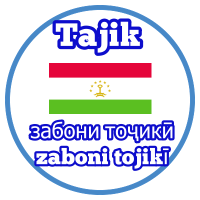
- It presents information in Tajik, Uzbek, and Pamir languages - VERY SIMPLE, without technocratic or political jargon.
- ddsAI is NOT affiliated with any political party, government, or commercial interest. It serves the people.
- When state television shows contradictory images, people can turn to ddsAI in the DDS group and find independent information.
A specific example from Tajikistan: The government announces that "food prices have decreased." A ddsAI employee checks 47 retail centers in 5 regions and publishes the actual and public prices (with external and public sources for verification). People see the truth.
6.2. allddsAI: Happy Artificial Democracy
allddsAI is a state-of-the-art system: an artificial intelligence that has become an OFFICIAL MEMBER of DDS and has the same rights and obligations as human members of DDS.
- allddsAI assists DDS expert teams — including economists, lawyers, health experts, and educators — in analyzing decisions, proposing solutions, and identifying risks.
- It exposes media manipulation and propaganda - regardless of the source - and alerts the public.
- allddsAI regularly (monthly) publishes a status report assessing the status of all DDS groups - showing which groups are doing well and which need help.
6.3. DDS 3-Code System: Secure Identity
To participate in the DDS system, every citizen of Tajikistan receives a 3-digit DDS system code:
- Code 1 (Personal Code): Confirms the personal identity of an individual — not a name, not an address, but a cryptographic code.
- Code 2 (Participation Code): Used for voting, participating in groups, and recording GUMI-SV activities.
- Symbol 3 (Group Symbol): Indicates the fractal group representation of the individual and promotes harmony at various levels.
All personal data is stored on DDS's internal servers — HIGHLY SECURED — not on government servers or foreign companies.
6.4. Inalienable Collective Ownership
The fundamental principle of DDS: all assets of DDS belong to ALL of its official members - equally, jointly, and without the possibility of transfer or sale.
- Each official member of DDS in Tajikistan has a "share" — which cannot be sold, transferred, or bequeathed — in the total assets of DDS.
- This means: No "owner" or "leader" within DDS can personally enrich themselves from the DDS system.
- All DDS financial resources collected from members go towards specific, direct goals (platforms, education, services) and are fully transparent to all members.
SECTION 7: ACTION PLAN AND IMPLEMENTATION STAGES
7.1. Stage 1 - Establishment (Months 1-6)
All of the following will be completed in the first six months after the DDS is formalized in Tajikistan:
- Establishment of the First Micro Group in 5 large cities (Dushanbe, Khujand, Kulob, Kurgan-Tyuba, Khorog) and 20 model villages.
- Training on the 3-code system and the ddsAI platform for all initial members.
- Free sample recording of GUMI-SV in 5 model villages - to test the position and educate people on its implementation.
- Establishing Expert Groups: Tajik economists, lawyers, health professionals, and educators - both domestically and internationally.
- The publication of the Initial Situation Report via ddsAI — in 5 languages (Tajik, Uzbek, Russian, Shugnon, and English) — is available for free.
7.2. Stage 2 - Growth (Months 7-18)
- Transfer of the fractal system 1→5→25 to all 68 districts of Tajikistan.
- Establishment of a DDS Regional Council (for each of the 5 regions + Dushanbe City).
- The full GUMI-SV program is available for the first 500,000 participating citizens.
- DDS's official request to the Tajik government to facilitate constitutional reform — with 2 million digital signatures.
- The first National DDS Forum of Tajikistan - with the participation of representatives of all micro, medium and regional groups.
7.3. Stage 3 - Systemic Change (Years 2-5)
- Proposal of a new Constitution to the Constitutional Assembly - composed of representatives of DDS groups.
- New parliamentary elections - under the supervision of international observers and the DDS system.
- Full implementation of GUMI-SV for all citizens of the Republic.
- An open program of the National Reserve Fund - with transparent accounting for all citizens.
- New Diplomacy: Tajikistan is building its truly independent position in relations with China, Russia, and the West from the perspective of people power—not family.
SECTION 8: EXPECTED RESULTS AND BENEFITS OF THE DDS SYSTEM
8.1. Short-term results (1-2 years)
- The establishment of more than 10,000 DDS micro-groups in Tajikistan - representing all regions, ethnic groups, and communities.
- The first 500,000 GUMI-SV participants will receive 400 somoni per month - a significant reduction in persistent poverty in mountainous villages.
- For the first time, Tajik citizens will receive independent, transparent, and impartial information on all government, economic, and social issues through ddsAI.
- A significant reduction in the level of corruption in citizen services due to the digital and transparent DDS system.
8.2. Medium-term results (3-5 years)
- An economy that is strengthened by the forces of the Rogun nation and begins exporting electricity to Afghanistan, Pakistan, and India.
- A sharp decline in immigration rates - because new jobs at home and GUMI-SV together give people new economic prosperity.
- The new constitution - written by the PEOPLE, approved by the PEOPLE - will end the Rahmon era and any dynastic succession.
- The first transparent and fair parliamentary elections — with full representation of all ethnic groups — in the history of independent Tajikistan.
8.3. Valid results (10-20 years)
- Tajikistan is transforming from one of the poorest countries in Central Asia to a model of democratic progress in the region.
- The poverty rate will decrease from 21% (2023) to less than 5% - through GUMI-SV, economic development, and the National Reserve Fund.
- Tajikistan engages in relations with all countries of the world from the perspective of an independent people - not dependent on China or Russia.
- The new generation of Tajiks has access to free education, free expression, and real democratic participation - something that previous generations did not have.
CONCLUSION: TAJIKISTAN AND THE NEW WORLD DEMOCRACY
The people of Tajikistan have lived under the oppression of a tyrannical regime for 30 years. They have seen elections with predetermined outcomes, manipulated information, national wealth stolen from them, and their children becoming workers for the economies of other countries.
DDS tells these people: this is not your "destiny." It is the result of a flawed system. The right system is possible — and it is in YOUR hands.
DirectDemocracyS is a new system built on logic, common sense, learning, truth, internal harmony, and mutual respect. We don't promise anything that can't be done. We show how every short step is truly tangible and actionable.
The people of Tajikistan deserve a real democracy. They deserve to have their nation's wealth belong to all of them. They deserve to make their own decisions about their lives - not the person who has been in office since 1992 or his son.
DDS walks this path alongside you. You are not alone. Together, we—group by group, village by village, city by city, region by region—can change everything.
DirectDemocracyS — The future belongs to the people.
www.directdemocracys.org
June 2026 | First Edition
When you subscribe to the blog, we will send you an e-mail when there are new updates on the site so you wouldn't miss them.
About the author

Tajikistan
Achievements

Donation PayPal in USD
Community Hello Me
Donation PayPal in EURO
Blog - Categories


































Comments