
The compatibility assessment and the skills assessment are very important for everyone who wants to join us, as well as for those who have already joined us, and therefore for our entire system. The previous sentence clearly explains some details about these steps, which everyone must complete, both before and after joining us.
Before starting, a short but useful introduction.
No two people are alike, and at DirectDemocracyS, we embrace unity in diversity. While we have identical rules, methodologies, instructions, and motivations, applied equally to everyone, while offering everyone who deserves them the same opportunities; thus, by allowing everyone the same potential, there are two evaluation phases that make everyone different, and therefore potentially useful, and certainly fundamental to our system and our community: compatibility and competence.
Compatibility.
Being compatible means being able to best express your potential and skills, without experiencing unpleasant surprises.
The best example of compatibility is a marriage between two people, but also a relationship, or integration into a particular society. If two people get married, or start a relationship, or live together in a certain space, interacting with each other, it's always best to be compatible, to prevent potential problems that can make coexistence difficult, or often impossible.
Obviously, compatibility is very difficult to assess, and we often realize it too late that we're incompatible. We know it takes time and mutual understanding to understand whether you can or cannot coexist, but there are certain steps that make it possible to determine whether you're suited to collaborating and interacting in various activities.
Unlike skills, it is not possible to use a precise evaluation criterion, such as the grade you get on an exam or a quiz, to assess compatibility.
We must rely on our premises, our feelings, and our ability to adapt to each other.
DirectDemocracyS has its own system architecture, which allows it to adapt to all types of people, but it's our visitors, and in some cases even our users, who aren't able to adapt to our innovation. A very useful piece of advice is to avoid comparing DirectDemocracyS to all the other systems. For example, when studying our political organization, don't always look for similarities with other political forces, because you're unlikely to find them. The ideal would be to immerse yourself in something completely new and therefore unknown, pretending to be in a parallel universe, even if DirectDemocracyS is real in this respect. By pretending to be in another dimension, everything is new, and therefore you can study and understand it better, even piqued by curiosity about our project. Only in this way can we discover and evaluate our enormous potential. Anyone who starts looking for similarities with all the others, or even for minor flaws, is completely misguided and risks drawing superficial, and often hasty, conclusions. Let it be clear to everyone: since our system is a collective effort, developed with those who have joined us and continued with those who will join us in the future, we don't fear comparisons with others, nor anyone's judgment. It's unlikely we'll find major flaws, only small things, which we can modify and improve, thanks to our constant evolution and our adaptability to different situations. Especially in our early stages, there were many people who criticized everything, convinced that if they were in our system previously, they would have done a different and better job. We've always told everyone: if you don't like something, join us and help us change and improve. There were people who, in order to join us, demanded that we change and make our rules worse. In some cases, they asked us to simplify, in others, to try to resemble all the other systems. It's those who join us who must adapt, not us who must change, because we have created a fair, equitable, meritocratic, and professional system that cannot be overturned to please a few people, who often only hope to exploit our system, as they already do with everyone else. So, avoid giving us ultimatums like: either you do what I want and say, or I won't join you. DirectDemocracyS is a collective project, and everything is decided together, based on free and truly democratic rules and methodologies. We know full well that it's practically impossible to avoid comparisons, and that's why, to be compatible with us, we recommend having the right and appropriate mindset, and the right and best political vision. A new suggestion: don't join us and immediately start wanting to access restricted and vital areas of our system. It doesn't work that way; we don't let anyone in, anywhere, at any time, but it often takes time, therefore patience, and above all, concrete, ongoing efforts, to gain access to certain areas. Also, avoid coming in and wanting to change everything, both because you're unlikely to have the skills and ability to change and improve your previous work, but above all out of respect for those who came before you who sought and found solutions for the common good.
Every person is unique,
Compatibility with DirectDemocracyS is not difficult, but some mutual verification is mandatory, between our system and all those who wish to participate, as well as all those who have already registered, created a personal profile, and have been activated, being able to access our reserved areas, based on their user type.
How do you check compatibility?
Compliance with all our rules, through your behavior and concrete individual and group activities, will always demonstrate to us who is compatible with you. For those who want to join us, we have created some very detailed compatibility tests, which anyone can complete through quizzes, video calls on our platforms, and other methods. The "test" does not measure knowledge, but behavioral and relational skills. These activities can be repeated at any time, with different quizzes and other video calls, even after new users have been activated. All tests are conducted using a scientific method, with no exceptions, and therefore the same rules apply to everyone.
What if I'm not compatible?
If a person doesn't meet the required compatibility level at that time before joining us—which is very high in the initial stages and gradually becomes less demanding in later stages—their application to join us will be postponed until we become somewhat less demanding. Therefore, while their profile will not be activated, it will remain registered, and they will be granted a new attempt at a later stage. However, if the incompatibility is not demonstrated after their profile is activated, there will be consequences, which may include disciplinary action, loss of a certain number of points, or, in moderately serious cases, profile blocking, or, in serious and very serious cases, expulsion from our system.
The competence.
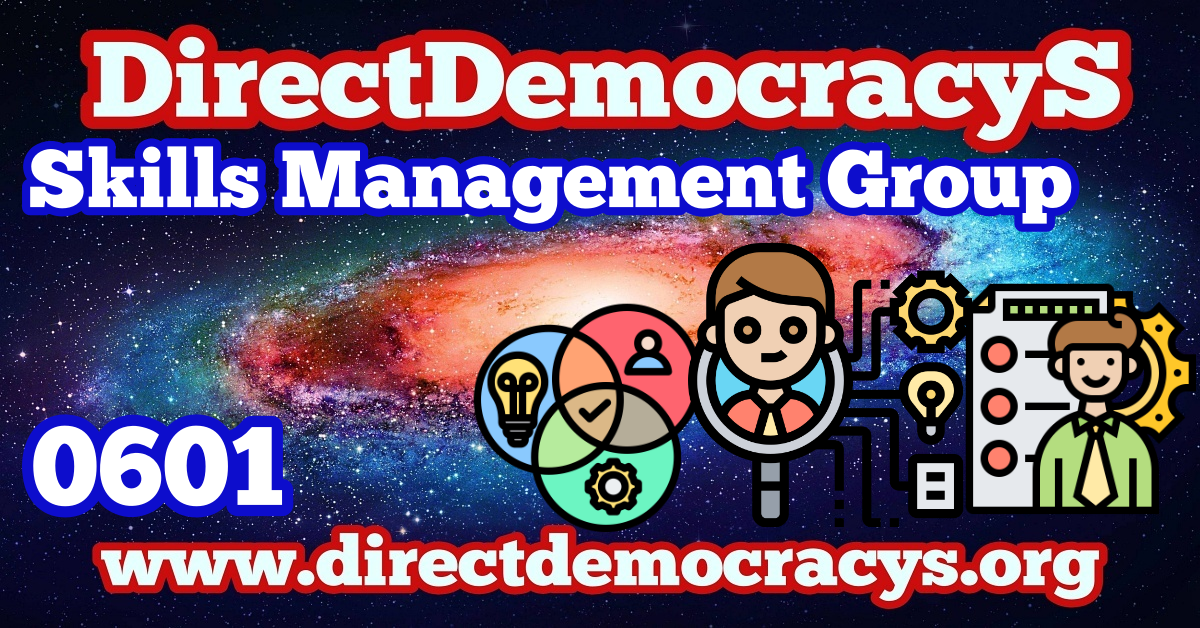
A brief introduction to competence.
Every person is different and has individual qualities and the ability to express their potential, based on their abilities. For us, every person is unique and of inestimable value, but to achieve the best results for their own good, for the good of their family and friends, and therefore for the good of our system, each person must be placed in the best possible conditions, doing exactly what they do best.
Everyone's competence must first be declared, documented, verified, evaluated by specialist groups, and finally authorized by the Competence Authorization Group.
Of course, every one of our users, without exception, must be available to update their skills, and must demonstrate their proficiency at any time, even unexpectedly, by video calling our team of specialists on our platforms, all in accordance with very detailed implementation rules.
Keeping your skills up to date is crucial, and a quick review of all your skills, along with our well-founded rules, methodologies, and instructions, helps prevent others from using our specialist profiles.
How are skills assessed, and by whom?
To assess the skills of both individuals and our entire teams, we employ various teams of vetted specialists who use tests, quizzes, video calls, and other methods to assess the professional abilities and merits of each individual. We also utilize state-of-the-art technologies, which, together with our human experts, rigorously assess all skills.
Brief explanation: virtually every good person, with the best intentions, who wants to join us, or has already done so, has something they're truly skilled at, or an activity they do really well. Therefore, almost anyone can join us and reach their full potential, empowered to be useful to themselves and our system, for the common good and interests. The important thing is that everyone does what they do best. From the very beginning, at DirectDemocracyS, we put the right people in the right places.
How do we assess individual and group skills and abilities?
Skills are assessed by our skills assessment teams and many other teams involved in these important activities. Individual skills are verified by our individual and group skills assessment teams, and many other teams involved in these important activities. Skills are assessed by verified specialists, and individual and group skills are evaluated based on the concrete results of individual and group activities and compliance with all rules, methodologies, and instructions. Skills are demonstrated through quizzes and video calls with assessment teams, and individual skills are demonstrated through the individual points and group activities earned since joining us. The same rules apply to new users, with the only difference being that since they haven't yet been activated and can't yet earn significant points, there will simply be a preliminary assessment based on quizzes and video calls to demonstrate their individual and group skills.
Scientific rigor, not privileges, or subjective likes and dislikes.
DirectDemocracyS as a system, and everyone involved, does not base their evaluations on suppositions, theories, conspiracies, internal or external struggles, promises, the interests of a select few, or personal sympathies. We prefer to use intelligence, truth, reality—and therefore, study and knowledge. This method allows us to guarantee the same rules, the same methodologies, the same standards of judgment, and the same opportunities for everyone, always rewarding merit. Since all our activities involve countless groups of people, with equal rights, duties, and powers, assigned randomly and therefore impossible to determine, it is mathematically impossible for any of our system to have preferences, favors, privileges, or interests of a select few that do not follow scientific rigor.
Let's be clear: in DirectDemocracyS, there are no biases in the application of all our rules, and there are no possible methods to exploit the system for the personal gain of a few individuals or groups of people. There are no people who can say, "I'm the best at certain topics; therefore, I won't be verified by anyone," or make ridiculous statements like, "You don't know who I am."
The DirectDemocracyS system architecture, while recognizing the compatibilities and merits of each individual and each group, must have all the necessary measures to prevent any possible problem, and in the event that someone tries to be smart, each of our users, all of our technologies, and all of our systems, must work in a coordinated and continuous manner, to defend our common good, and our final goal: to change and improve the world.




































































a. To accept full responsibility for the comment that you submit.
b. To use this function only for lawful purposes.
c. Not to post defamatory, abusive, offensive, racist, sexist, threatening, vulgar, obscene, hateful or otherwise inappropriate comments, or to post comments which will constitute a criminal offense or give rise to civil liability.
d. Not to post or make available any material which is protected by copyright, trade mark or other proprietary right without the express permission of the owner of the copyright, trade mark or any other proprietary right.
e. To evaluate for yourself the accuracy of any opinion, advice or other content.